I first noticed her at dusk, when the heat finally loosened its grip on the street and people hurried home with bags of dinner in their hands. She stood at the edge of a busy intersection, half-hidden by a pile of discarded boxes, her body rigid with hunger and fear. Cars rushed past in blurs of light and sound. One wrong step and she would be gone.
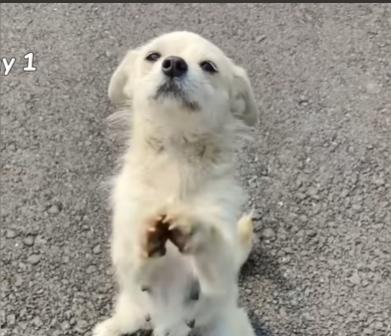
She was a mother dog.
You could see it in the way she watched everything—never fully turning her back, never relaxing. Her ribs pressed sharply against her skin, her coat dull and patchy. One of her back legs trembled as she stood, but she didn’t sit down. Sitting meant weakness. Weakness meant death. And somewhere, not far away, her puppies were waiting.
She moved suddenly, darting forward as a woman dropped a half-eaten container of rice near the curb. A horn blasted. Tires screeched. My breath caught in my throat as the mother dog leapt back just in time, her paws skidding on the asphalt.
She grabbed the food and ran.
Not to eat it—but to hide.
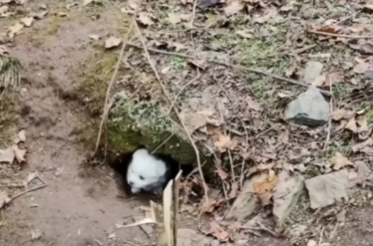
I followed slowly, keeping my distance. She slipped between buildings, down a narrow alley slick with garbage water, and into a vacant lot choked with weeds. At the far end, barely visible, stood the remains of a collapsed house. The roof had caved in long ago, leaving only broken walls and shadows.
She disappeared inside.
Moments later, I heard the sounds that explained everything.
Tiny cries.
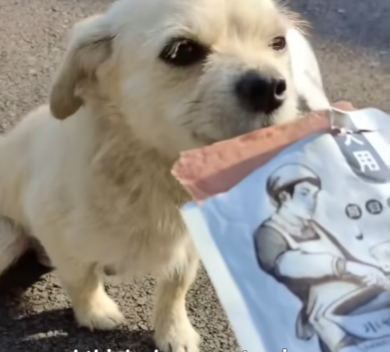
Five puppies crawled toward her, their movements clumsy, their eyes barely open. They pushed against her belly, squeaking urgently. The mother dog dropped the food and immediately lay down, ignoring her own hunger so they could nurse.
That was when I understood the danger she faced every day.
To keep them alive, she had to leave them.
And to leave them, she had to cross the road.
Over the next few days, I watched her routine. At dawn and again near sunset, she crept out of the ruins and headed toward the traffic. She searched trash piles, begged silently near food stalls, and risked her life weaving between vehicles. People shouted. Some chased her away. One man raised his foot as if to kick her. She flinched but didn’t run until she had something—anything—in her mouth.
Every time, she went back to her puppies.
On the fourth day, everything went wrong.
It happened fast. Too fast.
She was crossing the road with nothing to show for her search, her steps slower than usual. A motorcycle swerved to avoid her. The rider lost control. The bike skidded across the pavement, slamming into her side.
She cried out and rolled.
Traffic stopped. People shouted. Someone laughed nervously. The mother dog tried to stand and collapsed again, her leg twisted beneath her. Panic flooded her eyes—not for herself, but for what she couldn’t see.
Her puppies.
She dragged herself toward the curb, ignoring the pain, scraping her skin raw on the road. I ran to her, heart pounding, waving my arms to stop the cars. When I reached her, she growled weakly, teeth bared in fear.
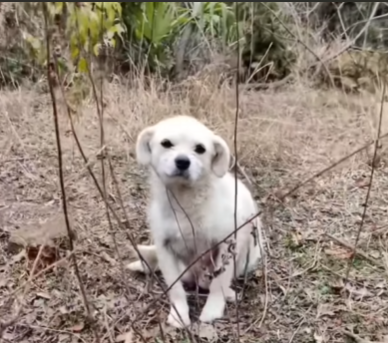
I didn’t touch her.
I knelt and spoke softly.
She stared at me, chest heaving, then looked past me—toward the alley, toward home. Her growl faded into a broken whine.
Help arrived minutes later, though it felt like hours. A local rescue team gently lifted her onto a blanket. She struggled, twisting, crying, trying to get away.
“She has puppies,” I said. “We have to get them.”
Two rescuers followed me back to the ruined house. Inside, the puppies were crying loudly now, their small bodies huddled together for warmth. Without their mother, they were helpless.
We carried them back to the clinic.
When the mother dog saw them, she tried to rise despite her injury. Her tail beat weakly against the table. She sniffed each puppy again and again, as if counting them, making sure they were real.
Only then did she close her eyes.
The vet examined her leg. A fracture, painful but treatable. What worried them more was her condition overall—severely malnourished, dehydrated, exhausted beyond what her body should have survived.
“She’s been running on love alone,” the vet said quietly.
The surgery was successful, but recovery would take time. For the first few nights, the mother dog barely slept. Every sound from the puppies made her lift her head. When they cried, she tried to crawl toward them until the nurses placed them close enough for her to touch.
We named her Grace.
As days passed, Grace began to understand something new. Food arrived regularly. Clean water waited in a bowl. No one chased her away. No one raised a hand.
Her puppies grew stronger quickly. Their bellies filled out. Their cries turned playful. They learned to walk, then to run, tumbling over each other in clumsy joy.
Grace watched them constantly.
But now, she could rest.
Weeks later, when Grace took her first steps without pain, the staff applauded softly. She hesitated at the clinic door, ears twitching at the distant sound of traffic. Her body stiffened, old fear rising.
Then one of her puppies bumped into her leg.
She looked down.
And stepped forward.
Adoption day came sooner than expected. Families arrived, eyes shining, hands gentle. Each puppy left in the arms of someone ready to protect them.
Grace watched quietly.
When the last puppy was gone, she searched the room, confused. I knelt beside her and stroked her head. She leaned into my hand, tired but trusting.
Grace was adopted too.
She lives now in a small house with a yard full of sunlight. She sleeps on a soft bed. She eats without fear. Sometimes, when she hears a loud engine, she freezes for a moment.
Then she remembers.
She is safe.
This rescue story has moved me in ways words can barely capture. A mother dog risked traffic, hunger, and death itself for her puppies—and asked for nothing in return.
Love did the rest.