Baboons are often misunderstood. With their serious faces, sharp eyes, and loud voices, many people think they are always angry. But if you watch closely—really closely—you will see that baboons are full of personality, emotion, and even cuteness. Their lives are a mix of drama, family love, curiosity, and yes… a lot of adorable anger.
In the early morning, as the sun rises over the rocky hills and open plains, a troop of baboons wakes up together. They stretch, yawn, and groom one another, picking through fur with careful fingers. Grooming is more than just cleaning—it is how baboons say “I care about you,” “You are my friend,” or sometimes, “Please don’t be mad at me.”
Among the troop is a young baboon named Kiko.
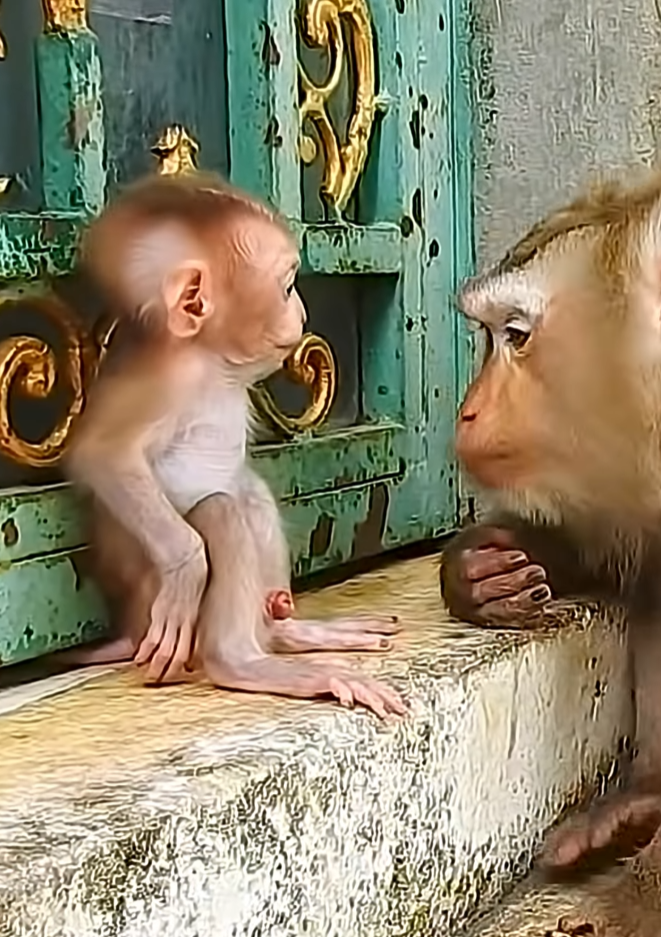
Kiko is small compared to the adults, but his personality is huge. He has bright eyes, fluffy fur, and the most expressive face in the whole group. When he is happy, his tail curls with excitement. When he is curious, his head tilts to the side. And when he is angry—everyone knows it.
Kiko’s anger is famous.
It often begins with a tiny frown. His eyebrows pull together, his lips push forward, and he lets out a short, sharp grunt. It sounds serious, but looks surprisingly cute. He stamps his feet, shakes his head, and puffs out his chest, trying to look fierce like the adult males.
But Kiko is still just a baby.
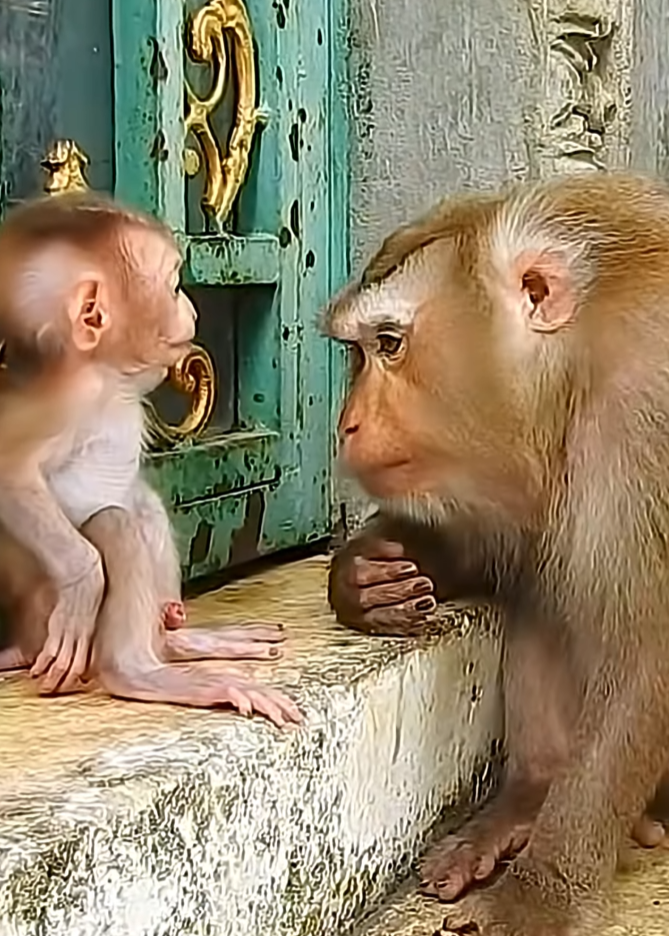
One morning, Kiko spots a piece of fruit left behind by humans near the edge of the plains. His eyes light up. Fruit is a treasure—sweet, colorful, and rare. He runs toward it, already imagining the taste.
Just as he reaches out, another young baboon grabs it first.
Kiko freezes.
Then comes the anger.
He squeaks loudly, stomps the ground, and bares his tiny teeth in a dramatic display. His face turns serious, as if he is the most dangerous baboon in the world. The other baboon pauses, surprised. Around them, adults glance over, barely hiding their amusement.
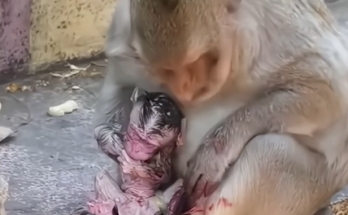
Kiko’s mother watches closely. She doesn’t rush in right away. This is part of learning. When Kiko’s anger grows louder, she finally steps forward, gives him a gentle nudge, and pulls him close. The message is clear: being angry is okay, but staying safe is more important.
Kiko grumbles softly but settles down, resting against her warm fur.
Life goes on.
Baboons spend much of their day moving together—walking, climbing rocks, searching for food. They are smart and social animals, always watching each other, always communicating. A flick of the tail, a glance, a sound—every action has meaning.
Kiko learns fast.
He learns that anger doesn’t always mean fighting. Sometimes it means speaking up. Sometimes it means stepping back. And sometimes, it just means you’re tired or hungry.
At midday, the troop rests under a large tree. The heat is strong, and everyone slows down. Babies play, rolling in the dust, chasing insects, and climbing onto patient adults. Kiko joins a group of young baboons wrestling playfully.
Everything is fun—until someone pulls his tail.
Instant anger.
Kiko jumps up, squeals loudly, and shakes his whole body. His expression is dramatic, his movements exaggerated. He looks like a tiny storm cloud ready to explode. But instead of fighting, he runs straight to his mother and throws himself into her arms.
Safe again.
She grooms him slowly, calming him down. With every gentle touch, his anger melts away. His eyes soften. His breathing slows. Soon, he is relaxed, almost sleepy.
This is how baboons grow—through emotion, connection, and care.
In the late afternoon, danger appears. A distant movement in the grass sends a warning through the troop. Adult baboons rise, alert and serious. They stand tall, watching carefully. Kiko feels the tension and clings to his mother.
For the first time that day, his anger disappears completely.
Fear teaches him something important: the troop protects each other. When one baboon is threatened, all respond. Strength is not just about being loud or angry—it is about staying together.
The danger passes, and the troop relaxes. As evening comes, the baboons climb toward their sleeping place among the rocks. The sky turns orange and pink, and the world becomes quiet again.
Kiko is tired now. His day was full of emotions—excitement, frustration, anger, comfort, and learning. As he curls up beside his mother, he lets out a small sigh. His face is peaceful.
Tomorrow, he will probably get angry again.
He will stomp, pout, squeak, and show his tiny teeth. He will try to act brave and strong. And the troop will watch, guide, and protect him as he grows.
Because that is the life of baboons.
Not just wild and loud—but full of feeling. Even the cutest angry monkey has a heart that learns, loves, and belongs.