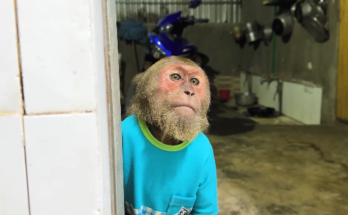
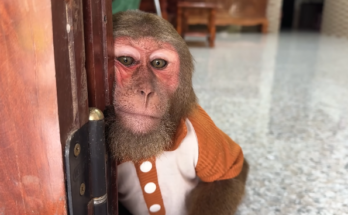
In the depths of dense forests, monkeys are creatures of freedom, swinging effortlessly between trees, leaping from branch to branch, and living lives defined by natural instincts, social bonds, and the rhythms of the wild. Yet, across many parts of the world, these beautiful animals often face a grim reality: they are captured, confined, and kept by humans, far from the life they were born to live. The fate of the poor monkeys kept in captivity is a tragic story of suffering, longing, and the consequences of human interference.
The Reality of Capture
Many monkeys in captivity were once free-living creatures, raised in the forest or savannah. They were captured for various reasons—entertainment, tourism, research, or as exotic pets. The methods of capture are often cruel. Hunters use traps, nets, or even violence to subdue the animals, sometimes killing adult members of the troop to isolate babies. The trauma begins immediately, as young monkeys witness the loss of family and familiar surroundings.
Once captured, monkeys are transported in small cages or containers, often without food, water, or ventilation. During these journeys, some do not survive. Those that do arrive in human hands are usually scared, traumatized, and malnourished. The transition from freedom to confinement is abrupt and harsh, and the effects on the monkeys are profound.
Life in Captivity
For monkeys kept by humans, life is drastically different from the forest. Natural behaviors like climbing, swinging, foraging, and socializing are restricted. Many are confined in small cages or enclosures that prevent movement, often with little to no enrichment. Their mental and physical health deteriorates rapidly.
Social animals, monkeys are particularly vulnerable to isolation. Young monkeys separated from their families may become depressed, anxious, or aggressive. Even when housed with others, the unnatural conditions can lead to stress-related behaviors: pacing, rocking, self-harm, or compulsive grooming. The lack of natural stimuli and freedom leaves them trapped in a state of constant frustration and confusion.
Abused for Entertainment
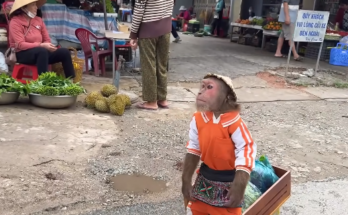
Some monkeys are forced into human entertainment, such as performing tricks on streets, participating in tourist shows, or appearing in videos for social media. These animals are trained through punishment, deprivation, and coercion. Small physical punishments, food restrictions, or even confinement are used to ensure obedience.
The mental suffering is immense. Monkeys are intelligent creatures, capable of complex thought and emotion, and they understand their confinement. A monkey forced to perform tricks while being deprived of its freedom experiences psychological torment. Their natural instincts—to climb, play, explore, and interact with their troop—are suppressed, replaced by fear, stress, and exhaustion.
Health Consequences
Monkeys kept in captivity often suffer from serious health issues. Poor nutrition, inadequate veterinary care, and lack of exercise lead to malnutrition, weakened immune systems, and muscular atrophy. Dental problems, skin infections, and digestive disorders are common. Some monkeys develop chronic illnesses due to stress, while others live in cages that fail to protect them from extreme weather, further jeopardizing their health.
Moreover, confinement often shortens their lifespan. A monkey that could have lived for decades in the wild may survive only a fraction of that time in human care, its body and mind gradually breaking down under unnatural conditions.
Emotional Trauma
The emotional impact of captivity is profound. Monkeys are highly social animals with complex emotional lives. The separation from family, the inability to form natural bonds, and the forced subordination to humans all contribute to chronic psychological suffering.
Many captive monkeys exhibit behaviors indicative of depression or anxiety: they rock back and forth, stare vacantly, or engage in self-harm. Others display aggression toward humans or fellow monkeys, a sign of stress and frustration. Their intelligence, which should be a source of enrichment and problem-solving, becomes a source of suffering when their environment cannot satisfy their natural curiosity.
Orphaned Babies
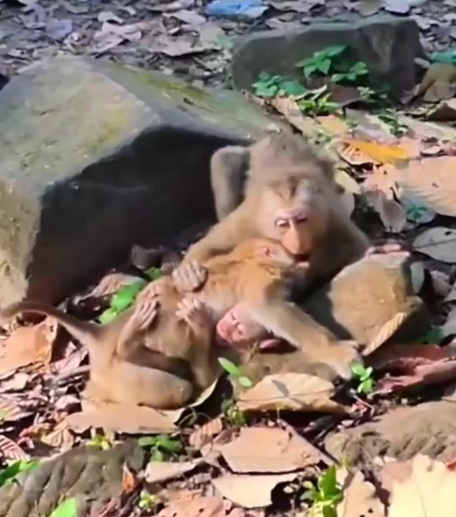
The most tragic cases are the young monkeys taken from their mothers. Orphaned babies are especially vulnerable. In the wild, a mother’s care is vital for survival, teaching the baby how to find food, avoid predators, and socialize within the troop. In captivity, these babies are often fed improperly, handled roughly, or forced to perform for attention or profit.
Some become “pets” in households, treated more as toys than living beings. Their intelligence and energy can overwhelm owners, leading to neglect, abandonment, or abuse. Many of these babies never develop normal social behaviors, making it difficult for them to integrate with other monkeys later in life.
Attempts at Rescue
Thankfully, there are organizations dedicated to rescuing and rehabilitating monkeys kept by humans. Sanctuaries and wildlife rescue centers work tirelessly to remove monkeys from abusive environments and provide proper care. These organizations feed, treat, and gradually rehabilitate the animals, sometimes attempting to reintroduce them to the wild when possible.
Rescue is a slow and delicate process. Many monkeys have spent years in captivity, and adapting to natural environments requires patience, training, and understanding. However, even in sanctuaries, they face challenges. Monkeys who have grown up with humans often struggle to interact with wild counterparts or to forage independently. Yet, the love, care, and freedom these sanctuaries provide can bring healing, joy, and dignity to lives that were once full of suffering.
Lessons for Humanity
The plight of monkeys kept by humans is a harsh reminder of the consequences of our choices. These animals are not possessions—they are sentient beings with complex social structures, emotional lives, and natural instincts. When we remove them from their natural environment, we disrupt not only their lives but also the delicate balance of ecosystems.
Education and awareness are crucial. People must understand that buying monkeys as pets, supporting entertainment shows, or taking part in tourism activities that exploit animals perpetuates suffering. Every choice can contribute either to the captivity and abuse of animals or to their protection and freedom.
Hope for the Future
Despite the grim reality, there is hope. Increasing awareness, stricter wildlife protection laws, and the work of dedicated rescue organizations are slowly changing the fate of many monkeys. Social media, documentaries, and educational campaigns help people understand the suffering caused by captivity and inspire action.
Communities are beginning to recognize the importance of preserving natural habitats and resisting the commodification of wild animals. Sanctuaries provide safe havens, giving monkeys a chance to live with dignity and, in some cases, return to the forests where they belong.
Conclusion
The fate of poor monkeys kept by humans is a story of suffering, abuse, and lost freedom, but it is also a story of hope, resilience, and the possibility of redemption. Monkeys taken from the wild endure trauma, poor living conditions, and emotional and physical distress. Yet, through the efforts of rescue organizations, compassionate caregivers, and growing public awareness, many find a chance at a better life.
It is a call to action for humanity: to respect wildlife, to protect their habitats, and to recognize that freedom, social bonds, and natural behavior are not luxuries—they are necessities for the well-being of these intelligent, sensitive creatures. By learning from the suffering of these poor monkeys, humans can create a future where wild animals are no longer exploited, but cherished and allowed to live the lives they were meant to live.
The story of these monkeys is a mirror reflecting both the cruelty and compassion of humans. Their suffering urges us to act, while their resilience inspires us to imagine a world where every monkey can swing freely, play safely, and thrive in the forest, just as nature intended.