In the dense heart of a vibrant jungle, where sunlight danced through the leaves and the air was filled with the sounds of chirping birds, buzzing insects, and rustling branches, there lived a monkey unlike any other. His name was Sunwookong, and for as long as anyone could remember, he was the funniest monkey in the troop. From daring acrobatics to clever pranks, Sunwookong’s antics had entertained the troop for months, then years. But over time, he became more than just a source of laughter—he became a symbol of courage, cleverness, and even wisdom.
Sunwookong’s reputation as the troop comedian started when he was just a baby. While other infants clung timidly to their mothers or cautiously explored the jungle floor, Sunwookong launched into adventure with boundless curiosity and fearless energy. He would leap onto fallen logs, swing between low branches, and even try to mimic the stern gestures of older monkeys. One particularly funny morning, he had climbed a high branch and tossed a banana into the air only to catch it with his tiny feet, squeaking in delight. The older monkeys froze in astonishment, then erupted into laughter. Even the alpha male, usually serious and stoic, allowed a brief twitch of amusement to escape his stern face.
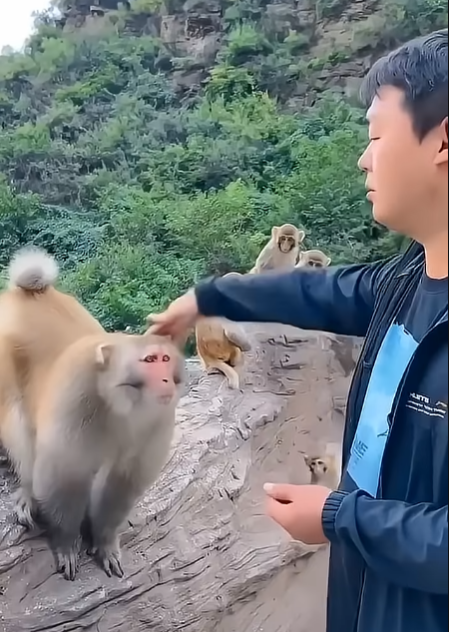
As he grew, Sunwookong’s sense of humor only intensified. The jungle was a stage, and he was the star performer. He would slide down muddy slopes, chase birds in exaggerated zig-zag patterns, and even “battle” imaginary enemies, squeaking and gesturing as if he were a mighty warrior defending the entire troop. His antics often attracted other jungle animals too—frogs, birds, and lizards seemed to watch his performances as if they were part of the audience. Sunwookong had a way of making even ordinary moments unforgettable.
However, the turning point in Sunwookong’s life came when he was old enough to understand the dynamics of the troop. Life in the jungle was not always easy. There were moments of danger—predators, sudden storms, and disputes over food and territory. Sunwookong realized that while laughter was important, his presence could also provide courage and leadership when needed.
One particularly memorable incident occurred during a sudden rainstorm. The troop had sought shelter in the dense foliage, shivering and clinging to branches, but Sunwookong saw an opportunity. With the rain pouring down, he leapt onto a slippery branch, performing dramatic flips and squeaks, sliding down a muddy slope, and shaking off the raindrops with exaggerated flair. At first, the troop was nervous about the slippery ground and falling branches, but Sunwookong’s fearless, playful energy was contagious. Slowly, the other monkeys began to follow him, sliding, leaping, and playing in the rain. By the end of the storm, the troop had transformed a potentially frightening situation into a joyful, unforgettable adventure—all thanks to Sunwookong.
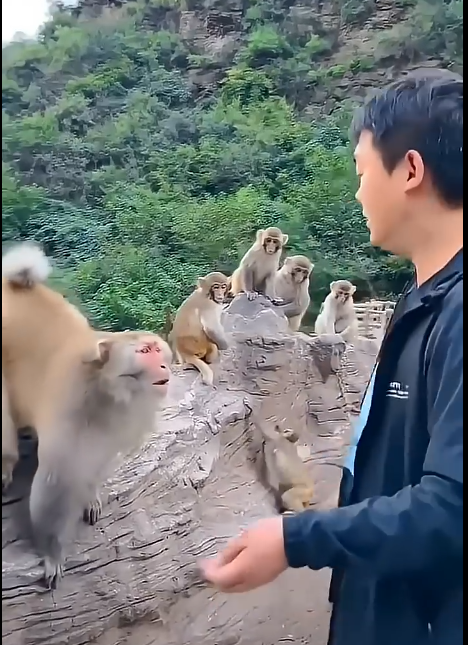
Sunwookong’s sense of humor also became a tool for diplomacy within the troop. Conflicts were common—arguments over food, minor scuffles over territory, and rivalries among the juveniles. Sunwookong discovered that his playful antics could diffuse tension and prevent fights from escalating. On one occasion, two young monkeys began to wrestle aggressively over a mango. The alpha male was nearby, watching cautiously, ready to intervene. Sunwookong, seeing an opportunity, leapt between them with exaggerated gestures, making funny squeaks, and mimicking their angry expressions. The two juveniles paused, stared at him in surprise, and then erupted into laughter, abandoning their quarrel. Even the alpha male allowed a small smile. Sunwookong had shown that humor could be a powerful tool for peace.
Over time, Sunwookong also became a teacher, using his cleverness to help the younger monkeys learn essential skills. While others might have scolded or pushed the babies around, Sunwookong demonstrated by example. He would climb tricky branches, cross streams, or find hidden food spots, often making the process fun by turning it into a game or performance. The younger monkeys would eagerly follow, attempting the stunts themselves, occasionally tumbling and squeaking, but always laughing and learning. Sunwookong’s playful approach transformed what could have been stressful lessons into joyful adventures.
Sunwookong’s reputation grew beyond his troop. Animals from neighboring parts of the jungle began to notice his antics. Birds would chirp extra melodically when he appeared, frogs would hop in seemingly synchronized patterns as if dancing to his performance, and even small deer watching from the edges of the jungle seemed entertained by his antics. Sunwookong’s fame was well earned—not just for his humor, but for the joy, courage, and cleverness he inspired in others.
Yet, it wasn’t all fun and games. Sunwookong’s intelligence and bravery often got him involved in serious situations. Predators were a constant threat, and he learned to warn the troop using clever signals. One day, a large snake slithered near the troop’s sleeping area. Most monkeys froze in fear, unsure what to do. Sunwookong, spotting the danger, jumped onto a high branch, squeaked loudly, and made a series of dramatic gestures to alert everyone. His quick thinking allowed the troop to scatter safely. From that day on, the elders regarded Sunwookong not only as a comedian but as a protector—a small monkey with a big heart and a sharp mind.
Sunwookong’s humor also strengthened bonds within the troop. Grooming, feeding, and climbing together were made lighter and more enjoyable because of his antics. He had a knack for noticing when someone was sad or tense, and he would instantly find a way to make them laugh. Sometimes it was a funny face, a mock stumble, or a tiny performance that exaggerated everyday tasks. The troop thrived under his influence, finding joy even in challenging times.
One of the most remarkable stories of Sunwookong’s journey involved a baby monkey who had fallen behind the troop. The little one was terrified and crying, lost among the dense foliage. Sunwookong, spotting the danger, immediately rushed to the rescue. Using a combination of squeaks, gestures, and playful antics, he encouraged the baby to follow him. He made exaggerated leaps and funny noises, turning a frightening situation into a lighthearted journey back to safety. When they finally reunited with the troop, the baby clung to Sunwookong, squeaking happily, as if saying, “Thank you for saving me and making it fun at the same time.”
Even the alpha male had grown to respect Sunwookong. While other monkeys relied on strength and authority to command attention, Sunwookong relied on intelligence, humor, and courage. In many ways, he had become a cornerstone of the troop—someone who could entertain, teach, protect, and bring everyone together. His ability to combine laughter with practical wisdom made him truly unique.
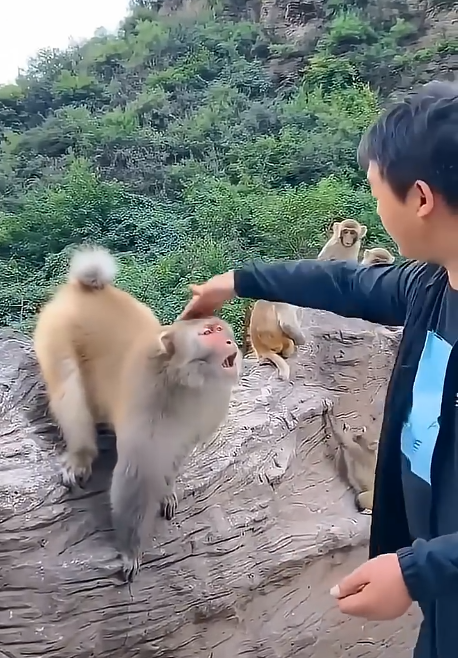
Over time, Sunwookong’s humor evolved as well. While he still performed stunts and pranks, he began to use subtlety, timing, and cleverness to make his performances even more effective. A raised eyebrow, a perfectly timed squeak, or an exaggerated pause could turn an ordinary situation into a moment of pure hilarity. His reputation as the funniest monkey was solidified, but now he carried an added dimension: he was also clever, courageous, and deeply caring.
One afternoon, during a particularly dry season, the troop faced a serious challenge. Water sources had dwindled, and the younger monkeys were scared to venture far. Sunwookong, seeing their fear, decided to lead a water-hunting mission. But he didn’t just take them; he made it a game. He pretended to be an explorer, hopping over roots and rocks, squeaking in excitement, and encouraging the others to follow. By the time they reached a hidden stream, the monkeys were not only safe but exhilarated. They had learned how to navigate the jungle under Sunwookong’s guidance, all while laughing and having fun.
Sunwookong’s legacy continued to grow. He had become more than a source of laughter—he was a teacher, a protector, a unifier, and a symbol of courage and cleverness. His antics inspired other monkeys to take risks, explore, and enjoy life to the fullest. Even neighboring animals seemed to recognize his leadership and playful spirit, often joining in his games or watching from a distance with curiosity and admiration.
Despite all of his responsibilities and heroic deeds, Sunwookong never lost his sense of humor. He continued to slide down muddy slopes, perform flips, imitate older monkeys, and engage in playful pranks. His joy was contagious, reminding everyone in the jungle that laughter and courage could go hand in hand. The troop learned that a small monkey with a big heart could make a profound impact, not by intimidation or force, but through cleverness, kindness, and humor.
In the end, Sunwookong’s story is a lesson in the power of personality. He started as a funny little monkey, bringing laughter wherever he went. Over time, he became so much more: a protector, a teacher, a unifier, and a symbol of joy and courage. His antics, which once seemed simple and silly, had a deeper impact, shaping the jungle community and inspiring others to face challenges with cleverness and a smile.
Even as Sunwookong grew older, his playful spirit remained. He continued to entertain, teach, and protect, proving that humor was not just for fun—it was a tool for life. Through laughter, courage, and cleverness, Sunwookong became unforgettable, showing everyone in the jungle that even the smallest monkey can leave the biggest mark.
And so, in the sun-dappled jungle where every branch and leaf seemed alive, Sunwookong remained a legend. The funniest monkey of all had grown into so much more, and his story would be remembered for generations. The troop, the jungle, and even the neighboring animals had learned the same lesson: sometimes, the most powerful force isn’t strength or size—it’s laughter, courage, and a heart big enough to care for others. 🤣🤣