Anyone who has spent time watching monkeys knows that their family life is full of small, fascinating details—tiny habits that reveal big truths about comfort, trust, and survival. One of the most interesting of these behaviors can be seen when baby monkeys interact with their fathers. While it might seem logical that a baby would enjoy sitting proudly on dad’s shoulders, high above the ground, many baby monkeys strongly disagree. In fact, most of them make their preference very clear: they don’t want to sit on their dad—they want to sit under him.
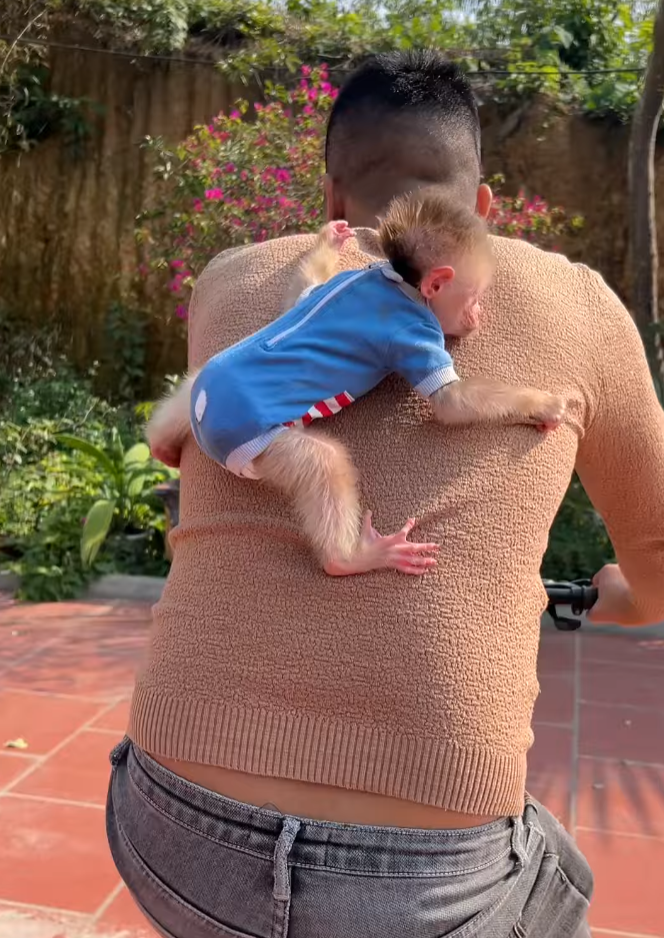
At first glance, this behavior can look funny. A strong adult male monkey walks along confidently, and underneath his chest or belly, a tiny baby clings tightly, almost hidden from view. From the outside, it looks uncomfortable, cramped, or even awkward. But for the baby monkey, this position feels just right.
For a baby monkey, the world is enormous and unpredictable. Sounds are loud, movements are sudden, and danger can feel like it’s everywhere. Sitting on a parent’s shoulders might offer a good view, but it also means exposure. Up high, the baby feels every step, every shift of balance. The wind brushes against their face, unfamiliar shapes pass by quickly, and there is nothing shielding them from the unknown. For a tiny monkey still learning how to exist in the world, that can be overwhelming.
Underneath dad, everything changes.
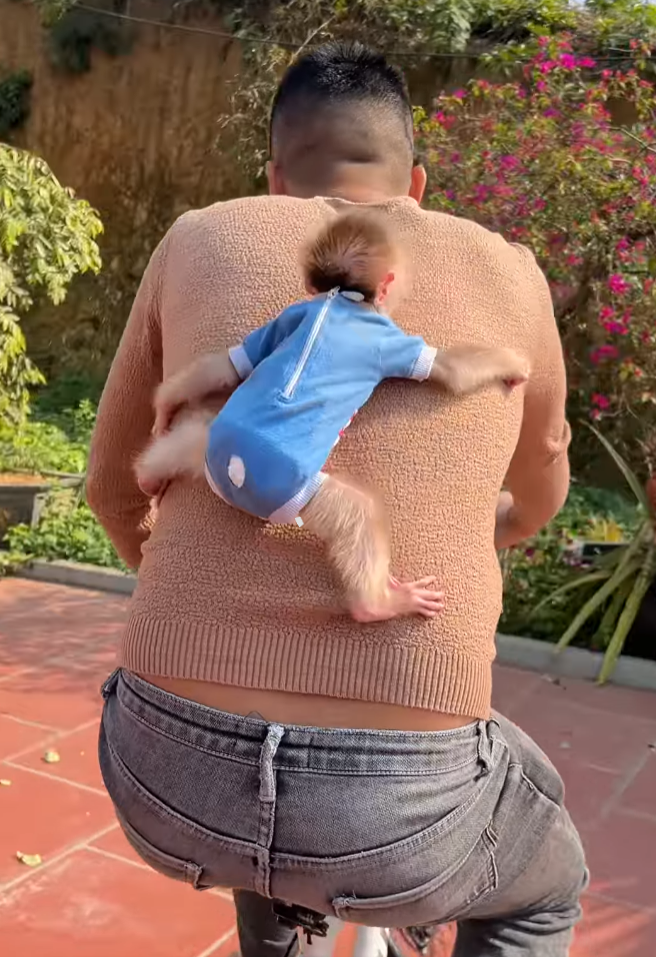
When a baby monkey clings beneath their father’s body, they are surrounded by warmth and familiarity. The father’s chest rises and falls in a steady rhythm, creating a calming motion that reminds the baby of earlier days spent close to their mother. The baby can feel the father’s heartbeat, hear his breathing, and sense his strength. This position offers not just physical support, but emotional comfort.
Security plays a huge role in this preference. Underneath the father, the baby is protected from above and from the sides. If something unexpected happens—a loud noise, a sudden movement, another animal passing nearby—the father’s body acts like a shield. The baby doesn’t need to react immediately; the parent’s presence absorbs the shock first. This sense of safety allows the baby to relax, conserve energy, and observe the world without fear.
There is also the matter of balance. Sitting on shoulders requires coordination and confidence. An adult monkey can adjust easily, but a baby is still learning how to grip properly. One wrong movement, one slip of the hands, and panic sets in. Underneath, the baby can use all four limbs to cling securely. The grip feels natural, almost instinctive. Even when the father jumps or climbs, the baby feels anchored, not exposed.
Interestingly, this behavior is not about rejection or dislike of the father. Quite the opposite. Choosing to sit underneath shows deep trust. The baby monkey believes completely in the father’s ability to protect, carry, and respond. The baby is not seeking independence yet; it is seeking reassurance. Being underneath means being close, connected, and safe.
Observers often notice that when a father tries to place a baby on his shoulders, the baby quickly squirms, slides down, or clings stubbornly to the chest instead. Some babies protest with small squeaks or exaggerated movements, making their opinion very clear. Others simply refuse to let go, locking their tiny hands into fur and holding on with determination. To them, underneath is not just preferred—it is necessary.
This preference also reflects how baby monkeys experience the world emotionally. Babies are sensitive. They respond strongly to stress, unfamiliar environments, and changes in routine. Sitting underneath reduces stimulation. The baby sees less, hears less, and processes the world in manageable pieces. Instead of facing everything at once, they can peek out when they feel ready, then tuck themselves back into safety when it becomes too much.
As baby monkeys grow older, their preferences slowly change. Confidence develops. Muscles strengthen. Curiosity begins to outweigh fear. At that stage, sitting higher—on shoulders or nearby branches—becomes exciting rather than frightening. But this transition only happens after a foundation of trust and safety has been built. The early days spent clinging underneath play a crucial role in emotional development.
Fathers who allow this behavior demonstrate patience and understanding. They adjust their movements to accommodate the baby, slowing down, choosing stable paths, and maintaining balance so the baby can hold on comfortably. This quiet cooperation strengthens the bond between parent and child. The baby learns that their needs are respected, and the father learns how to respond to subtle cues—tightening grips, small shifts, or quiet sounds.
In some moments, the image is deeply touching. A strong father moving through the environment, while a tiny life depends entirely on him, hidden just beneath his chest. It’s a powerful reminder that strength is not only about size or dominance, but about protection and gentleness.
For humans watching from the outside, it’s easy to project our own ideas onto animal behavior. We might assume that higher means better, or that visibility equals confidence. Baby monkeys teach us something different. Comfort often comes from closeness, not height. Safety often comes from being held, not being displayed. Growth happens best when fear is met with patience, not pressure.
So when you see a baby monkey refusing to sit on dad’s shoulders and insisting on clinging underneath, remember that this choice is full of meaning. It’s not stubbornness or weakness. It’s instinct, trust, and emotional wisdom. In that small, sheltered space beneath their father, baby monkeys find exactly what they need most: warmth, security, and the quiet courage to face the world when they’re ready. 🐒❤️