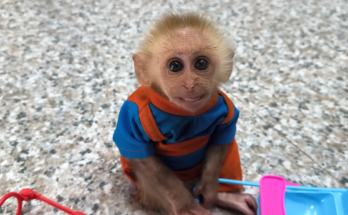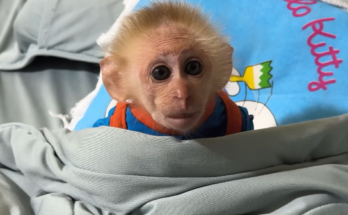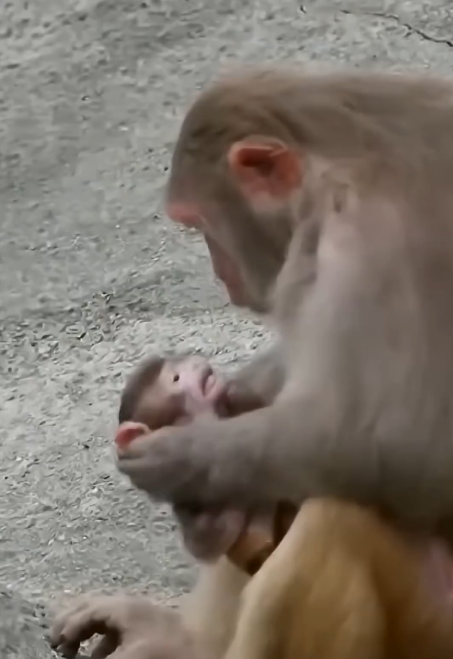
In the complex world of monkeys, the bond between mother and infant is one of the most delicate and profound relationships in the animal kingdom. From the moment a baby monkey is born, it depends entirely on its mother for nourishment, protection, and social learning. For months, the infant clings to its mother’s fur, nursing frequently, and learning the subtleties of social behavior. However, there comes a time in every monkey’s life when nursing must end, and the mother begins the process of weaning. While this transition is natural, it is often harsh, sudden, and emotionally challenging—both for the mother and the baby.
This process can evoke fear, anxiety, and frustration in the infant, highlighting the delicate balance between survival, independence, and emotional bonds in monkey societies. Observing this phase provides remarkable insights into the complexity of primate behavior, social hierarchies, and the harsh realities of growing up in the wild.
The Importance of Weaning
Weaning is a critical stage in the life of any mammal, including monkeys. It marks the transition from complete dependence on the mother’s milk to partial or full independence, allowing the young to consume solid foods and begin foraging. From a biological perspective, weaning serves several essential purposes:
- Nutritional Independence: Baby monkeys eventually require more calories and nutrients than a mother can provide through milk alone. Transitioning to solid food ensures they receive a balanced diet for growth and survival.
- Encouraging Independence: Mothers gradually encourage self-reliance, teaching infants to forage, climb, and interact with other troop members without constant reliance on maternal support.
- Reproductive Readiness: For mothers, weaning allows her body to conserve energy and prepare for the next reproductive cycle. Nursing an older infant can be physically demanding, reducing her ability to conceive and care for a new baby.
Although these reasons are practical and biologically necessary, the process can be emotionally difficult for the baby. The sudden withdrawal of nourishment and comfort can create fear, confusion, and distress.
The Harsh Reality of Weaning
Unlike human parenting, which often involves gradual, emotionally supportive weaning, monkey mothers can be surprisingly harsh in enforcing independence. While they may have shown tender care in early months, mothers begin to limit nursing as the baby grows, sometimes pushing the infant away or refusing to allow feeding when it is demanded.
In some cases, mothers use vocalizations, aggressive gestures, or even mild physical discipline to discourage nursing. A mother macaque, for instance, may snap at her infant or pull it away when it tries to cling for milk. A mother baboon may retreat or turn her back, signaling refusal. These actions are not born of cruelty—they are survival strategies—but for the infant, they can provoke fear, insecurity, and emotional stress.
Emotional Impact on the Baby Monkey
The baby monkey’s response to harsh weaning is complex and deeply emotional. Infants are biologically wired to seek comfort and security from their mothers. When this access is restricted, the baby experiences feelings akin to separation anxiety, confusion, and fear.
- Clinging Behavior: The baby may cling more desperately to the mother, attempting to nurse or seek reassurance. This clinginess is often met with rejection, escalating stress.
- Vocalizations: Infants frequently cry, whimper, or make distress calls when rejected. These vocalizations can alert other troop members, sometimes drawing attention or intervention from siblings or other females.
- Emotional Stress: Studies on primate behavior suggest that harsh weaning can induce cortisol spikes, indicating stress. Fear is not merely behavioral—it is physiological, affecting growth, immune function, and social development.
This emotional impact illustrates the delicate balance between maternal necessity and infant well-being. The mother’s harsh approach is functional for survival and reproductive strategy but emotionally challenging for the young.
Social Dynamics and Weaning

Weaning does not occur in isolation. In monkey troops, social hierarchies, peer interactions, and environmental pressures shape the process. The presence of other juveniles can either help or hinder the weaning process:
- Peer Observation: Baby monkeys often learn foraging and social behaviors by observing peers. When a mother enforces weaning, infants may rely on siblings or unrelated juveniles for comfort and guidance.
- Competition: In larger troops, infants must navigate competition for food, grooming, and attention while learning to survive without constant maternal support. Fear of rejection during weaning may push some infants to explore the troop environment more cautiously.
- Support Networks: In some species, other females act as “allomothers,” providing comfort, grooming, or protection for weaning infants. This network can reduce fear and anxiety, though it cannot replace the maternal bond.
The social context emphasizes that harsh weaning is part of a larger adaptive strategy. It encourages infants to become independent, navigate complex social networks, and learn survival skills essential for adulthood.
Observing Weaning in the Wild
Field studies provide vivid examples of harsh maternal weaning. In macaque troops in Southeast Asia, researchers have observed mothers gradually withdrawing nursing privileges around the 6- to 12-month mark. Initially, nursing frequency declines, with mothers only allowing feeding at certain times. Eventually, mothers push infants away or even climb high into the canopy to avoid them.
One striking observation involved a mother macaque who actively used vocal scolding and gentle swats to discourage her infant from clinging. The infant, terrified and confused, would hide beneath foliage or call for support from siblings. While stressful, these moments ultimately taught the baby to forage independently, climb efficiently, and respond to environmental dangers—skills critical for survival.
In another case, a mother baboon refused to allow her infant to nurse for days, forcing it to explore for insects, leaves, and small fruits. The infant’s initial fear gradually gave way to curiosity, skill development, and social engagement with the troop. Observers note that, while emotionally challenging, this process strengthens resilience and adaptability.
Psychological Development and Resilience
Harsh weaning may appear cruel, but it serves a deeper purpose in psychological development. Baby monkeys who experience controlled stress during weaning often develop enhanced coping mechanisms. They learn to tolerate frustration, seek resources independently, and navigate social interactions more confidently.
- Risk Assessment: Fear during weaning teaches infants to assess threats, approach cautiously, and avoid dangerous situations.
- Problem Solving: Infants must figure out how to obtain food without maternal assistance, promoting cognitive development.
- Social Integration: Interacting with peers and troop members without relying on maternal support helps young monkeys learn social norms and cooperation.
These developmental benefits suggest that, while fear is a natural response to harsh weaning, it also plays a role in preparing the infant for life in the wild.
Ethical Considerations and Human Observation
Watching harsh weaning can evoke strong emotional responses in humans. Many feel empathy for the infant and distress at the mother’s seemingly “cruel” behavior. However, it is essential to interpret these events in a biological and evolutionary context.
For the mother, harsh weaning is an adaptive strategy. It ensures she can allocate energy to future offspring, maintain her health, and teach survival skills effectively. For the infant, the experience—while emotionally challenging—promotes independence, resilience, and survival competency. Observing these dynamics reminds humans that nature often operates with efficiency rather than sentimentality.
The Role of Environment in Weaning

Environmental factors heavily influence the timing and harshness of weaning. In areas with abundant food, mothers may wean more gradually, providing more opportunities for the infant to adjust. In resource-scarce environments, mothers may enforce weaning more abruptly to conserve energy and maximize survival chances.
Predation, troop size, and social competition also affect weaning strategies. Infants must learn quickly to navigate their environment, avoid predators, and interact socially. Fear experienced during harsh weaning accelerates learning, building confidence and survival skills in a challenging world.
The Balance Between Care and Toughness
Harsh weaning illustrates the balance between nurturing and toughening in monkey societies. While the mother’s actions may cause temporary fear, they are rooted in a complex understanding of survival and adaptation. The process highlights that maternal care is multifaceted—it combines protection, guidance, emotional connection, and preparation for independence.
Infants learn that fear is temporary, that challenges can be overcome, and that maternal care does not end abruptly but evolves into guidance and support in different forms. By experiencing fear during weaning, the baby develops resilience while maintaining the emotional bond with the mother.
Lessons for Humans
Observing maternal weaning in monkeys offers humans valuable lessons about parenting, resilience, and emotional growth. While human parenting often emphasizes emotional comfort, the principle of encouraging independence and skill development remains relevant. Controlled challenges, like those faced by weaning monkeys, can promote problem-solving, adaptability, and confidence in children.
Moreover, witnessing the emotional complexity of mother-infant relationships in monkeys reinforces empathy, compassion, and understanding of the natural world. It reminds us that care is multifaceted, sometimes involving tough love, and that fear can coexist with deep emotional bonds.
Conclusion
The life of monkeys is filled with complex emotional and social dynamics, and the process of weaning highlights one of the most challenging phases in an infant’s development. Harsh maternal weaning, while frightening for the baby, is a necessary and adaptive strategy that promotes independence, resilience, and survival skills.
Through rejection, fear, and gradual exposure to the wider world, baby monkeys learn to forage, navigate social hierarchies, and respond to environmental threats. Mothers, in turn, balance the dual roles of nurturer and teacher, combining tenderness with the tough guidance necessary for raising a capable and independent offspring.
Observing this process offers profound insights into the universality of care, the complexity of emotional bonds, and the delicate balance between protection and preparation. It teaches humans that nurturing sometimes involves challenging moments, that fear can foster growth, and that maternal love—while expressed harshly at times—is ultimately about guiding the next generation toward survival, competence, and resilience.
In the wild, every rejected cling, every frightened cry, and every cautious exploration of the baby monkey tells a story—not of cruelty, but of life’s essential lessons, the depth of maternal care, and the enduring bond between mother and child. The harshness of weaning, though difficult to witness, is a testament to nature’s wisdom and the profound, multifaceted love that exists in the animal kingdom.