
In the delicate world of animal behavior, few moments capture the complexity of emotion and instinct quite like the interaction between a young animal and its mother in times of uncertainty or danger. There is a tension, a duality, that often reveals itself in the smallest gestures: the animal is both frightened for its parent and still yearning for the comfort and security that only their care can provide. Observing this behavior offers profound insight into the emotional depth and intelligence of animals, showing us that their lives are rich with feelings and relationships, not merely driven by survival or instinct.
Imagine a small, vulnerable creature—a baby monkey, a puppy, or even a calf—tucked against its mother. A sudden threat or unfamiliar situation arises: loud noises, a strange scent, or human presence. The infant freezes. Its eyes dart, ears flick, and tiny body trembles. Instinctually, it wants to protect its mother, to ensure her safety, but simultaneously, it cannot resist the pull toward the familiar, nurturing presence that provides not only sustenance but a sense of security. This tension—the simultaneous fear and longing—is a striking display of the nuanced emotional life of young animals.
The Protective Instinct
Even at a very young age, animals show a remarkable capacity for empathy and awareness toward their mothers. While we often assume that fear in infants is solely self-protective, many studies in ethology demonstrate that young animals also express concern for their caregivers. In this scenario, the infant’s anxiety is not just about its own safety—it is about the well-being of the mother.
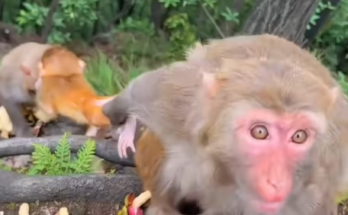
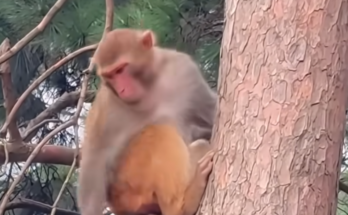
For instance, in many primate species, infants display signs of distress when their mother is in perceived danger. The infant’s body language—clinging tightly, vocalizing softly, or scanning the surroundings—reveals a cognitive recognition that the mother, too, could be at risk. This instinct is evolutionarily advantageous: the mother’s survival ensures the infant’s continued care and protection. The complexity of this emotional response is fascinating; it combines instinctual drive with emerging social awareness.
The Comfort of Nursing
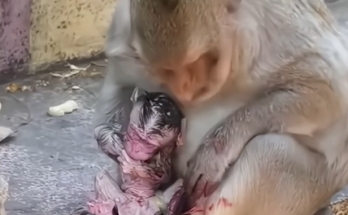
Despite fear or tension, the infant still gravitates toward the mother’s breast. Nursing is not merely a method of nutrition—it is a powerful source of comfort. Suckling activates the release of oxytocin, the bonding hormone, which reduces stress and fosters a sense of safety. This duality—fear for the mother coupled with a need for nurturing—creates moments of striking behavioral richness. The baby might tremble slightly, vocalize in a mix of anxious cries and contented coos, and continue to latch on, drawing both sustenance and reassurance.
This behavior highlights how physical closeness and tactile contact are essential in emotional regulation for young animals. It is not unusual to see the infant pause mid-nurse, ears perked, eyes scanning, then resume feeding moments later, seeking security while remaining alert to potential danger. The pattern is a delicate balance between survival and emotional bonding, demonstrating that even the youngest creatures navigate complex emotional landscapes.
Observing the Behavioral Signals
Careful observation of these moments reveals subtle cues about the infant’s internal state. A slight trembling of the limbs may indicate anxiety, while persistent eye contact with the mother may show vigilance and concern. Tail or limb movements may signal readiness to flee or freeze, reflecting fear, whereas the gentle sucking indicates comfort-seeking behavior. These mixed signals are not contradictory; they are complementary, reflecting the dual priorities of survival and attachment.
In many species, vocalizations are particularly telling. Soft whimpers or high-pitched cries often accompany moments of uncertainty, conveying both distress and the desire for reassurance. The mother, in turn, may respond by adjusting her posture, vocalizing softly, or grooming, signaling both protection and comfort. This dynamic creates a feedback loop where fear, care, and attachment are communicated and reciprocated, reinforcing the bond between mother and infant.
The Emotional Intelligence of Young Animals
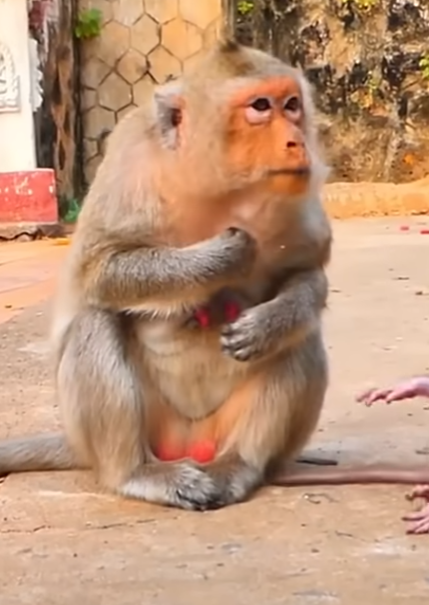
Such dual behaviors demonstrate an impressive degree of emotional intelligence in animals. The infant is not only aware of its own vulnerability but also capable of perceiving the emotional state of its mother. This capacity for empathy—feeling concern for another while simultaneously addressing personal needs—is a profound indicator of cognitive complexity. It challenges the simplistic notion that animal behavior is purely instinct-driven, suggesting that emotions and social awareness play a central role in development and survival.
Moreover, this intelligence is adaptive. By maintaining proximity and continued nursing, the infant ensures nutritional intake and emotional comfort while remaining responsive to external threats. By showing concern for the mother, it may also influence her behavior—encouraging vigilance or strategic movement to enhance the safety of both. This interdependence reflects the evolutionary importance of emotional awareness and social bonding.
Human Interpretation and Connection
Observing such behavior in animals often evokes deep empathy in humans. We see the mixture of fear, concern, and desire for comfort and recognize it as something profoundly familiar. It reminds us of our own experiences as children, moments of worry coupled with a need for parental reassurance. These parallels help humans connect with animals on a deeper level, fostering compassion and understanding that transcends species boundaries.
Documenting these interactions, whether in wildlife studies, domestic settings, or sanctuary observations, provides not only scientific insight but also emotional resonance. It illustrates that young animals are complex beings, capable of intricate emotional experiences. It also emphasizes the importance of nurturing, protection, and attentiveness in early development—principles that apply universally across mammalian life.
Examples Across Species
This dual response of fear for the mother while seeking comfort is observed across a variety of species.
- Primates: Infant monkeys often cling to their mothers during stressful situations. Even while nursing, they will pause to scan their environment, showing concern for maternal safety and readiness to respond to danger.
- Canines: Puppies may tremble and whine when sensing a threat but still return to their mother for warmth and milk, demonstrating attachment alongside vigilance.
- Felines: Kittens exhibit a similar pattern, nursing while periodically raising their heads to assess potential threats nearby.
- Ungulates: Young deer or goats often stay close to their mothers, nursing and seeking shelter while remaining alert to predators, combining instinctive caution with the need for nourishment.
In all these cases, the behavior serves a dual purpose: survival and emotional regulation, highlighting how deeply intertwined attachment and instinct truly are.
Nurturing Emotional Resilience
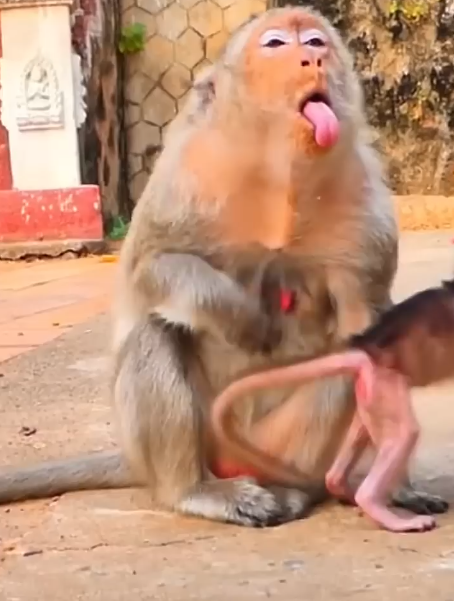
These early interactions with the mother also contribute to the infant’s long-term emotional resilience. The simultaneous experience of comfort and vigilance helps develop coping mechanisms, teaching the infant how to balance anxiety with reassurance. It is an essential part of social learning, preparing the young animal for independence while maintaining the foundational bonds that ensure survival and emotional security.
Over time, repeated experiences of both fear and care help the infant internalize a sense of safety and trust. The mother’s presence, combined with her responsiveness, creates a secure attachment style that will guide behavior and emotional regulation well into maturity.
Practical Implications for Caregivers
For humans raising or observing young animals, understanding this duality is crucial. Recognizing that an infant may simultaneously experience fear for its caregiver and still desire nursing or contact can guide compassionate interaction. For example, allowing gentle closeness while minimizing environmental stressors supports both physical health and emotional growth.
In sanctuaries or rehabilitation centers, caretakers often witness this delicate balancing act. Interventions should respect the infant’s instincts and attachment, ensuring that comfort is provided without overwhelming or forcing interactions. By doing so, caregivers can foster secure attachments and promote healthy behavioral development.
Conclusion
The sight of an infant both scared for its mother and still longing to nurse is a poignant reminder of the emotional depth of animal life. These moments capture a perfect blend of instinct, empathy, and attachment, revealing how young animals navigate complex emotional landscapes from the very beginning.
It is not simply a biological reaction—it is a dance of survival and care, fear and comfort, vigilance and trust. Through this behavior, we witness the intelligence, sensitivity, and resilience inherent in these young beings.
For those who observe these interactions, the lesson is clear: attachment, empathy, and nurturing are as vital to animals as they are to humans. Watching these behaviors unfold teaches us compassion, patience, and respect for the intricate emotional lives of creatures we often underestimate.
Ultimately, this tender duality—fear for the mother, desire to nurse—demonstrates the profound connection between love, care, and survival. It is a beautiful, heart-stirring glimpse into the world of infant animals and a reminder that attachment and instinct coexist in a delicate, meaningful balance.