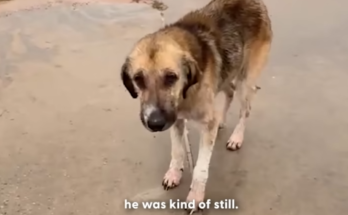
When neighbors first noticed the small brown dog sitting in front of an old wooden house, day after day, they didn’t think much of it. He was always there—curled beside the steps, nose resting on his paws, eyes fixed on the door as if waiting for someone only he believed would return.
They didn’t know then that he had become an orphan. They didn’t know that the one person who had loved him, fed him, talked to him, and shared life with him—had taken his last breath inside that same house a week earlier. They didn’t know the dog was sitting in mourning, holding onto hope with a loyalty that only animals possess.
The dog’s name was Tobi, a gentle mixed-breed with soft ears and a grey muzzle showing his age. He was already a senior dog, but his spirit was young. His owner, an elderly man named Samuel, had lived alone for years. Tobi was his family—his reason to get up, his motivation to walk, and his companion through lonely nights. The two were inseparable, seen strolling together every morning and sharing quiet evenings on the porch.
But everything changed the day Samuel didn’t come outside.
Tobi had barked, scratched, circled the door, confused and anxious. He didn’t understand that his owner had passed away quietly in his sleep. By the time the authorities arrived, Tobi had already begun his vigil. And when they removed Samuel’s body, Tobi followed the stretcher until he was forcibly shooed away.
He returned to the house anyway.
He waited.
And waited.
And waited.
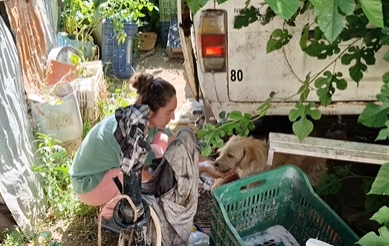
Every morning, he sat by the door. Every evening, he curled into a ball under the porch light. He didn’t leave—not for food, not for shelter, not even when the weather turned cold. His world had ended, and he remained at the last place that felt like home.
At first, neighbors tried to help. One woman brought out a bowl of rice. A boy left some leftover chicken. But Tobi wasn’t eating. He sniffed the food, looked back at the door, and lay down again. His grief was stronger than his hunger.
Days turned into a week, and the once-healthy dog became thin and fragile. Rain drenched him; cold winds shook him; harsh sunlight burned his skin. Yet he refused to move. It was as if leaving the house meant abandoning Samuel forever.
Finally, a local animal rescuer named Mara heard about the dog who never left his doorstep. She had seen cases of grief-stricken animals, but something about Tobi’s story pulled at her heart. She drove to the old house and found him exactly where neighbors described—sitting still, staring at the door as if expecting the knob to turn at any moment.
“Tobi… boy…” she whispered gently, crouching down.
He didn’t growl. He didn’t bark. He simply lifted his head, eyes clouded with sadness, as if asking her whether she had news—whether Samuel was coming back.
That look broke her.
Mara placed a bowl of fresh food in front of him and stroked his head slowly. “He loved you, didn’t he?” she whispered. Tobi leaned into her hand slightly, as if needing just a moment of comfort. It was the first sign that he still wanted to live.
But convincing him to leave was difficult. Every time she tried to guide him toward her car, he stopped and looked back at the house, whining softly. It was as if he were apologizing for leaving—even though he had no choice.
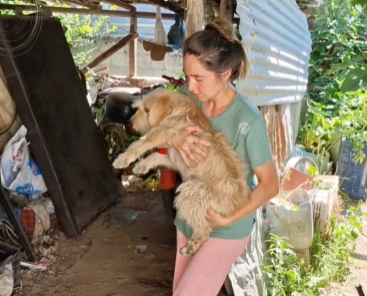
Finally, Mara gently wrapped him in a blanket, carried him to the car, and told him, “I promise—I’m not taking you away from him. I’m taking you somewhere safe.”
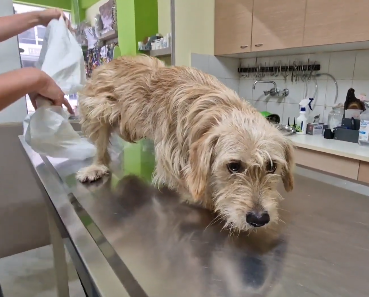
At the shelter, Tobi received a full medical check. He was malnourished, dehydrated, and severely stressed. His fur was matted, his ribs were visible, and his heart sounded weak. But the vet said something hopeful—“With care, he can recover.”
And care was exactly what he received.
Tobi’s first days at the shelter were heartbreaking. He often sat facing the wall, as if imagining the familiar old house. At night, he whimpered softly—grieving in the only way he could. The staff took turns comforting him, but his sadness lingered.
Then something changed.
One morning, a young volunteer named Ella brought him a blanket from her own home. It smelled faintly of lavender and warmth, and when she placed it in his bed, Tobi curled onto it immediately. It reminded him of Samuel’s presence—soft, gentle, comforting. From that day, Tobi began eating more. He started sitting up when someone approached. His tail, once motionless, gave tiny, hopeful wags.
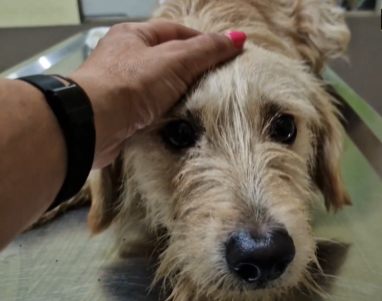
Slowly, he was healing.
Weeks passed, and Tobi’s transformation was undeniable. His fur regained shine, his eyes brightened, and he began socializing with the other dogs. He even enjoyed short walks with Ella, who spoke to him with the same affection Samuel once had.
But Tobi’s story didn’t end with survival.
One afternoon, a middle-aged man visited the shelter looking to adopt a calm senior dog. His wife had recently passed away, leaving him deeply lonely. When he saw Tobi, curled on his lavender blanket, their eyes met in a shared understanding: both had lost someone they loved.
The man knelt down.
“Hey, buddy,” he whispered. “Looks like we both need a friend.”
Tobi stood, walked over, and gently rested his head on the man’s knee—as if choosing him.
The shelter staff watched, teary-eyed. It was rare for an orphaned senior dog to find a home, but Tobi had found someone who understood grief as deeply as he did.
And so, Tobi left the shelter—not as an abandoned dog, but as a companion once more.
His new home was warm, filled with soft blankets and gentle voices. He had peaceful walks, treats, affection, and a comforting presence beside him. While he never forgot Samuel, he learned that love doesn’t disappear—it just changes form.
He had lost his first family…
But he gained another.
And for the rest of his days, he lived not as an orphan, but as a beloved soul who had been given a second chance.